
Officials from the High Commission of India Visit NBRI to Discuss Post-Cyclone Ditwah Rehabilitation and Landslide Risk Collaboration
March 17, 2026 | 10:15 AM
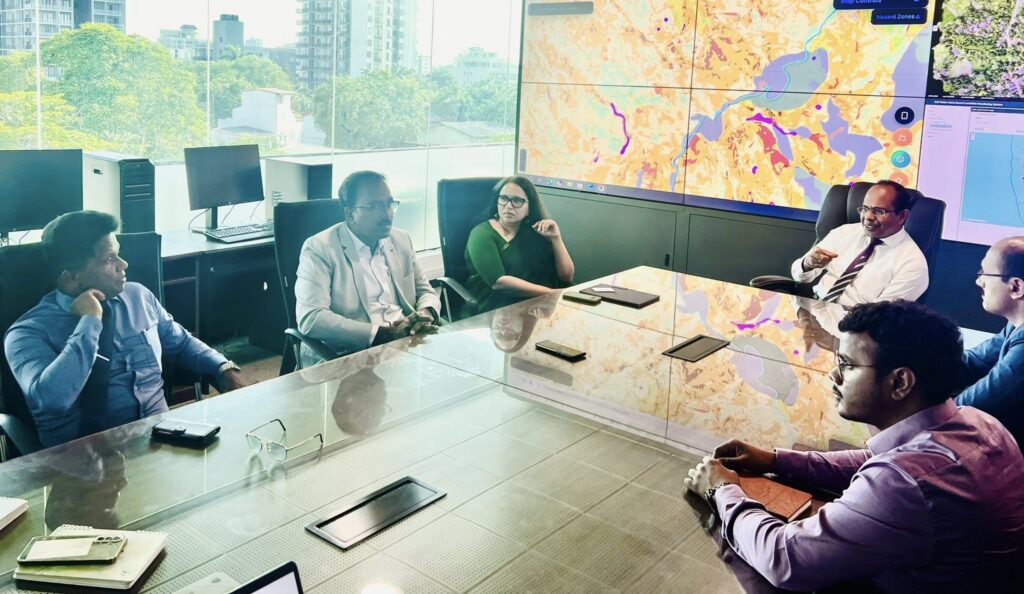
Officials from the High Commission of India in Sri Lanka, together with a delegation of technical experts from the Geological Survey of India, visited the National Building Research Institute (NBRI) today (16 March 2026) to discuss ongoing rehabilitation efforts following the impacts of Cyclone Ditwah and to explore opportunities for technical collaboration in landslide risk management.
The discussion focused on the progress of post-cyclone rehabilitation activities in landslide-prone areas and the measures being implemented to reduce the risk of further slope failures triggered by intense rainfall and soil saturation associated with the recent weather event.
The Director General of NBRI, together with senior officials of the Institute, participated in the meeting and briefed the visiting delegation on the actions taken by NBRI in monitoring landslide-prone locations, conducting field investigations, and providing technical recommendations for mitigation and rehabilitation.
During the meeting, the delegation from the Geological Survey of India expressed interest in collaborating with NBRI to study the recent landslide incidents associated with Cyclone Ditwah. As part of this collaboration, the visiting experts will join NBRI scientists and engineers in field investigations over the next several days to examine the affected sites. The joint studies will focus on understanding the mechanics and triggering factors of the recent landslides, including rainfall patterns, soil behavior, and slope stability conditions.
The collaboration is expected to facilitate technical knowledge exchange between the two institutions and contribute to strengthening scientific understanding of landslide processes in the region. The findings from the joint investigations will also support the development of improved strategies for landslide risk reduction, early warning, and resilient infrastructure planning in vulnerable areas.